Welcome to Our Company
 Send Email
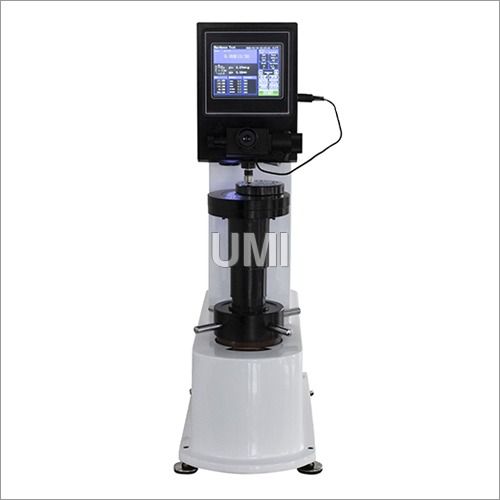
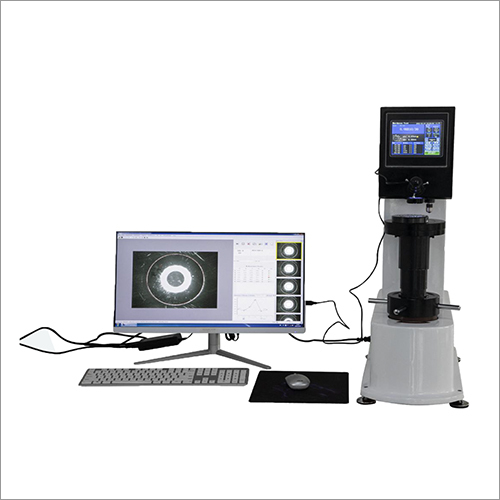
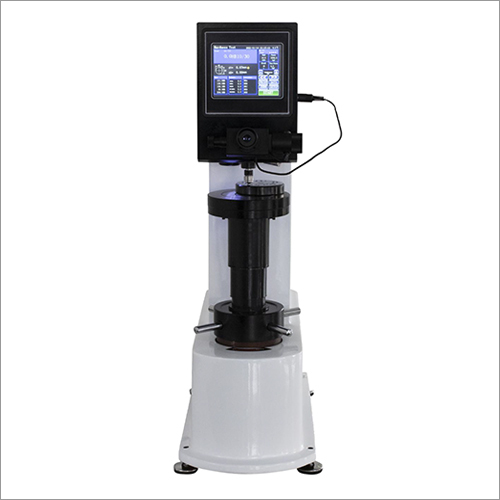
Touch Screen Digital And Computerized Brinell Hardness Tester
800000 INR/Piece
Product Details:
- Response Time <2 Seconds
- Measuring Range 8-650 HBW
- Hardness Brinell
- Operating Voltage 220V AC
- Equipment Type Brinell Hardness Tester
- Frequency 50Hz
- Features Automatic loading, digital output, large touch screen
- Click to view more
X
Touch Screen Digital And Computerized Brinell Hardness Tester Price And Quantity
- 1 Piece
- 800000 INR/Piece
Touch Screen Digital And Computerized Brinell Hardness Tester Product Specifications
- 10°C - 40°C
- 0.1 HBW
- 220 mm
- USB, Ethernet
- Approx. 120 kg
- Up to 3000 kgf
- Steel, Cast Iron, Non-ferrous Metals
- 10% - 85% RH
- Variable, 0.1 mm/s to 5 mm/s
- Automatic
- ±1%
- Single or Multiple (as per setting)
- White And Black
- 0-100 mm adjustable
- Benchtop
- Standard USB/Ethernet
- 8-650 HBW
- 220V AC, 50Hz
- Touch Screen LCD
- Industrial
- MS
- Up to 200 mm
- 10 mm to 200 mm
- Brinell
- 220V AC
- <2 Seconds
- 8-650 HBW
- Digital Touchscreen Control
- Automatic loading, digital output, large touch screen
- 50Hz
- Brinell Hardness Tester
- 2.5, 5, 10 mm
- Internal memory + USB export
- Supported
- Integrated measurement software
- 20x, 40x optical system
- Overload protection, emergency stop
- Online and onsite support
- Standard block supplied
- Tungsten Carbide Ball
Touch Screen Digital And Computerized Brinell Hardness Tester Trade Information
- 100 Piece Per Day
- 7 Days
- Asia, Australia, Central America, North America, South America, Eastern Europe, Western Europe, Middle East, Africa
- All India
Product Description
We are providing a distinct range of Touch Screen Digital And Computerized Brinell Hardness Tester. It is suitable for measuring the hardness of precision metallic parts. This tester is made with a premium quality of tools and materials. Touch Screen Digital And Computerized Brinell Hardness Tester is designed for precise loading system. It is driven and operated with touch screen method to save the time and energy of labour. It is able to determine the hardness from soft metal up to hardest.
Intuitive Digital Control and Measurement
Operate with ease using a large touch screen LCD and digital controls. The integrated measurement software automates data capture and analysis, reducing manual effort and user error. Results are instantly displayed and can be exported via USB, ensuring a seamless workflow for high-throughput industrial environments.
Adaptable for Various Metal Specimens
Accommodate specimens from 10 mm to 200 mm in size and up to 220 mm in height, making this hardness tester ideal for industrial applications involving steel, cast iron, and non-ferrous metals. The adjustable test stroke and variable speed provide flexibility for diverse testing requirements.
Reliable Performance and Safety
Engineered with automatic loading and digital output, this tester delivers 1% accuracy and 0.1 HBW resolution. Safety is enhanced with overload protection and emergency stop functions, while the robust MS material and benchtop mounting ensure durability during continuous operations.
FAQ's of Touch Screen Digital And Computerized Brinell Hardness Tester:
Q: How does the digital touchscreen control enhance the user experience with this Brinell Hardness Tester?
A: The digital touchscreen control offers a user-friendly interface for setting test parameters, monitoring the process, and viewing results in real-time. This simplifies operation and ensures efficient, error-free testing even for multiple specimens.Q: What types and sizes of metal specimens can be tested with this device?
A: This hardness tester is suitable for steel, cast iron, and non-ferrous metals. It can handle specimen sizes ranging from 10 mm up to 200 mm in width and up to 220 mm in height, meeting a wide array of industrial testing needs.Q: When should calibration be performed on the tester, and how is it done?
A: Calibration should be performed during installation, after intensive use, or periodically as part of routine maintenance. The tester includes a standard calibration block and guided instructions via integrated software to ensure precise calibration every time.Q: Where can data from the hardness tests be stored and how can it be exported?
A: Test data is stored internally within the device's memory, and it can be easily exported using the USB or Ethernet ports for further analysis or record-keeping. This feature streamlines data management for labs and production environments.Q: What is the process for adjusting the test stroke and speed on this hardness tester?
A: Operators can adjust the test stroke up to 100 mm and select variable test speeds from 0.1 mm/s to 5 mm/s directly from the digital touchscreen, allowing for optimization based on the material or specific application requirements.Q: How does the device ensure safety during operation?
A: The tester is equipped with overload protection and an emergency stop feature to prevent equipment or specimen damage. These safety measures safeguard both operators and samples during testing procedures.Q: What are the main benefits of using this automated Brinell Hardness Tester in industrial applications?
A: Key benefits include high accuracy (1%), rapid test response times (<2 seconds), automatic loading, versatile data handling capabilities, and robust support services. These features maximize productivity, ensure reliable outcomes, and reduce manual labor in industrial quality control.Tell us about your requirement

Price:
Quantity
Select Unit
- 50
- 100
- 200
- 250
- 500
- 1000+
Additional detail
Mobile number
Email

Other Products in 'Brinell Hardness Tester' category



Contact Details

- 203, The Business Center, Erandwane, Near Sanjivan Hospital, Pune - 411004, Maharashtra, India
- Phone : 08045811420
- Send Inquiry
GST : 27AAVPD3179J1Z6
 Send Inquiry
- Mr. Sanjay Dengare (Proprietor)
- Mobile : 08045811420
 Send Inquiry
 Send SMS
 Call Me Free

UNIVERSAL MOTION INC.
All Rights Reserved.(Terms of Use)
Developed and Managed by Infocom Network Private Limited.
Developed and Managed by Infocom Network Private Limited.


 English
 Spanish
 French
 German
 Italian
 Chinese (Simplified)
 Japanese
 Korean
 Arabic
 Portuguese