Welcome to Our Company
 Send Email
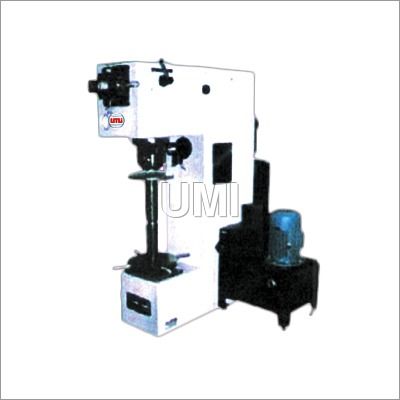
Industrial Brinell Hardness Tester
2500 USD ($)/Piece
Product Details:
- Accuracy Conforms to IS:2281, ISO 6506, and ASTM E10
- Equipment Type Brinell Hardness Tester
- Number of Specimens Single Specimen at a Time
- Humidity 10-90% RH
- Measuring Range 8-650 HBW
- Port Size Standard
- Test Range 8-650 HBW
- Click to view more
X
Industrial Brinell Hardness Tester Price And Quantity
- 2500 USD ($)/Piece
- 2500.00 - 5000.00 USD ($)/Piece
- 1 Piece
Industrial Brinell Hardness Tester Product Specifications
- Industrial
- 0.08 mm/sec
- 10-90% RH
- 8-650 HBW
- 450 kg
- Manual/Automatic
- 8-650 HBW
- Standard
- 8-650 HBW
- Conforms to IS:2281, ISO 6506, and ASTM E10
- 150 mm
- Brinell Hardness Tester
- Single Specimen at a Time
- Up to 3000 kgf
- 300 mm
- Sturdy Construction, High Accuracy, Easy Operation
- Testing Hardness of Metals and Alloys
- 220 V AC, 1-Phase, 50 Hz
- 50 Hz
- 200 mm
- 2 mm to 300 mm thickness
- 0.1 HBW
- Semi Automatic
- 220 V AC
- 10°C-40°C
- RS232/USB (Optional)
- Floor Mounted
- Immediate
- Analog/Digital
- Standard Accessories Included (Brinell Microscope, Test Blocks, Indentors, Weights)
- Low
- Mechanical
- 10-15 seconds adjustable
- Cast Iron
- Powder Coated
- Tungsten Carbide Ball 2.5 mm/5 mm/10 mm
- Dead Weight System
- Overload Protection
- 500 kgf, 750 kgf, 1000 kgf, 1500 kgf, 3000 kgf
Industrial Brinell Hardness Tester Trade Information
- 100 Piece Per Day
- 7 Days
- Middle East, Africa, Central America, South America, Asia, Western Europe, Eastern Europe, North America, Australia
- All India
Product Description
Product Details
MODEL | UNIT | UMI-3000 O |
Loads | | 500 to 3000 in stages of 250 |
Initial Load | kgf | Nil |
Max. test height | mm | 380 |
Depth of Throat | mm | 200 |
Max. depth of elevating screw below base | mm | 180 |
Size of base | mm | 370x670 |
Machine Height | mm | 1185 |
Net Weight (Approx) | Kg. | 500 |
Drive Motor | HP | 0.33-415v/p |
Precision Engineering for Industrial Applications
Designed for high accuracy and adherence to international standards, this Brinell Hardness Tester is suitable for rigorous testing of metals and alloys in manufacturing, research, and quality control labs. Its cast iron structure and powder-coated finish provide durability, while a mechanical sample clamping system ensures stability through each assessment. The machine accommodates a variety of specimen sizes and thicknesses, making it versatile for diverse industrial needs.
Flexible Load Application and Control
With a dead weight system offering selectable loads (500 kgf to 3000 kgf) and adjustable dwell time (10-15 seconds), users can tailor each test according to specific material requirements. The tester supports both manual and automatic operation, providing a seamless transition between different work processes. Mounting is simple, and floor installation aids accessibility and improved workflow within industrial contexts.
Comprehensive Accessories and Safety Features
The tester includes essential accessories such as the Brinell microscope, test blocks, indentors, and calibrated weights, ensuring every hardness test achieves high accuracy. Overload protection, sturdy construction, and a user-friendly interface (analog/digital display, optional RS232/USB connectivity) contribute to operator safety and maintenance ease. The low-maintenance design holds up in challenging environments, under humidity and temperature fluctuations.
FAQ's of Industrial Brinell Hardness Tester:
Q: How does the Brinell Hardness Tester apply force to the specimen?
A: The tester utilizes a dead weight system to apply loads directly through a tungsten carbide ball indenter. You can select from multiple load options-500 kgf, 750 kgf, 1000 kgf, 1500 kgf, or 3000 kgf-depending on the material's testing requirements.Q: What types and sizes of speciments can be tested with this machine?
A: This Brinell Hardness Tester accommodates single specimens at a time, ranging in thickness from 2 mm to 300 mm and up to 200 mm wide. It is designed for metals and alloys, suitable for various manufacturing and laboratory applications.Q: When is the dwell time adjusted, and what is its significance?
A: Dwell time is set between 10 and 15 seconds to allow the load to be maintained on the specimen for optimal indentation. Adjusting this parameter ensures accurate results by minimizing rebound effects in different materials.Q: Where is this equipment typically installed and used?
A: This Brinell Hardness Tester is floor-mounted and commonly deployed in industrial environments such as metalworking plants, laboratories, and quality control centers, where reliable hardness assessment is essential.Q: What is the testing process for measuring hardness?
A: First, clamp the specimen mechanically and select the required indenter and load. The tester then performs the indentation at a controlled speed, followed by immediate measurement using the included Brinell microscope, ensuring precise and repeatable results.Q: How does overload protection benefit users?
A: Overload protection safeguards the machine's components and ensures operator safety by preventing excess force during testing, thus enhancing equipment longevity and reliability.Q: What maintenance is required for this Brinell Hardness Tester?
A: Maintenance needs are minimal due to the robust construction and powder-coated finish. Routine cleaning, regular calibration with provided test blocks, and periodic checks of moving parts support ongoing precision and long service life.Tell us about your requirement

Price:
Quantity
Select Unit
- 50
- 100
- 200
- 250
- 500
- 1000+
Additional detail
Mobile number
Email

Other Products in 'Brinell Hardness Tester' category


Contact Details

- 203, The Business Center, Erandwane, Near Sanjivan Hospital, Pune - 411004, Maharashtra, India
- Phone : 08045811420
- Send Inquiry
GST : 27AAVPD3179J1Z6
 Send Inquiry
- Mr. Sanjay Dengare (Proprietor)
- Mobile : 08045811420
 Send Inquiry
 Send SMS

UNIVERSAL MOTION INC.
All Rights Reserved.(Terms of Use)
Developed and Managed by Infocom Network Private Limited.
Developed and Managed by Infocom Network Private Limited.


 English
 Spanish
 French
 German
 Italian
 Chinese (Simplified)
 Japanese
 Korean
 Arabic
 Portuguese