Welcome to Our Company
 Send Email
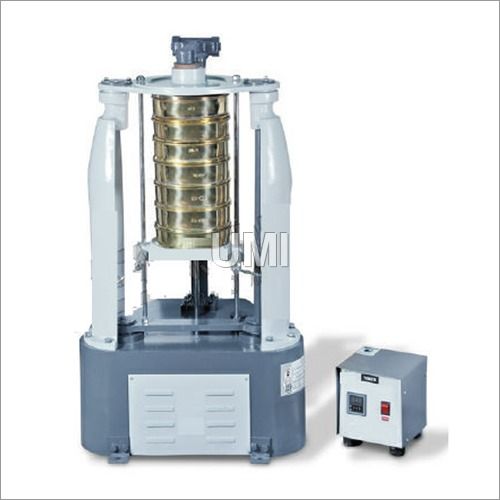
Dry Sieve Test Apparatus
1400 USD ($)/Piece
Product Details:
- Resolution As per sieve mesh
- Frequency 50 Hz Hertz (HZ)
- Power Supply 230V AC, 50 Hz
- Features Stacked sieves, clamping system, vibration motor, easy operation
- Mounting Type Tabletop
- Interface Type Manual
- Accuracy ±1% (timing) %
- Click to view more
X
Dry Sieve Test Apparatus Price And Quantity
- 1400 USD ($)/Piece
- 1400.00 - 3000.00 USD ($)/Piece
- 1 Piece
Dry Sieve Test Apparatus Product Specifications
- 230V AC, 50 Hz
- 50 Hz Hertz (HZ)
- Stacked sieves, clamping system, vibration motor, easy operation
- As per sieve mesh
- Manual
- Manual/Timer
- Tabletop
- Particle size analysis by dry sieve method
- Mild steel/SS body, powder coated
- ±1% (timing) %
- Up to 2 kg of sample
- Dry particle/granule sieving
- Ambient to 40°C Celsius (oC)
- 1 at a time
- Approx. 200 mm Millimeter (mm)
- Sieve Test Apparatus
- Manual
- Ambient
- Analog/Timer Dial
- 25 mm (Oscillation amplitude)
- 230V AC Volt (V)
- Approx. 25 kg Kilograms (kg)
- Standard 60 rpm
- Approx. 420 mm (with sieve stack)
- Less than 65 dB
- IS, ASTM compatible
- Set of sieves (optional), dust cover, instruction manual
- Enclosed drive system, overcurrent protection
- Vibration/Eccentric motor
- 0 to 60 Minutes
- Mild Steel/SS316, Powder Coated
- Knob-Type Top Clamp
- Powder Coated
- 75 mm to 200 mm
Dry Sieve Test Apparatus Trade Information
- Cash Advance (CA)
- Western Europe, Eastern Europe, Central America, South America, Asia, Australia, Middle East, Africa, North America
- All India
Product Description
We are indulged in providing a great series of Dry Sieve Test Apparatus. It is easy to assemble and can be changed by exchanging dry. It is used to determine the particle size of dry. Dry Sieve Test Apparatus is able to separate on their own. It is used for relative comparison among the geotextiles. It is equipped with a spray nozzle to ensure the wetting of the test specimen. It aids to avoid excessive deformation of the specimen.
Efficient Particle Size Analysis
Designed for laboratory and industrial use, this sieve test apparatus offers accurate, repeatable particle size analysis for powders and granules. Its manual and timer operation, combined with quick vibration setup and secure clamping, ensures efficient separation and classification of specimens. The apparatus is suitable for ambient humidity and temperatures up to 40C, supporting up to 2 kg sample weight and versatile testing needs.
Built for Precision and Safety
Constructed from powder-coated mild steel or SS316, the apparatus assures durability and corrosion resistance. The enclosed drive mechanism and overcurrent protection deliver user safety. With an analog/timer dial display and easy-to-mount tabletop design, the machine is reliable, straightforward, and compliant with industry standards including IS and ASTM, meeting key laboratory requirements.
FAQ's of Dry Sieve Test Apparatus:
Q: How does the Dry Sieve Test Apparatus operate for particle size analysis?
A: This apparatus uses stacked sieves and a vibration/eccentric motor to separate particulate samples according to mesh size. The specimen is placed in the sieve stack, securely clamped, and vibrated at 60 rpm for a set duration up to 60 minutes, allowing particles to pass through successive sieves for accurate size classification.Q: What materials and finishes are used in the construction of the sieve apparatus?
A: The equipment is fabricated from mild steel or SS316 stainless steel and features a powder-coated finish for enhanced durability, corrosion resistance, and longevity, suitable for frequent laboratory and industrial use.Q: When should a dry sieve method be preferred for particle analysis?
A: The dry sieve method is ideal when evaluating free-flowing powders or particulate materials where moisture could affect results. It efficiently separates samples in ambient temperature and humidity environments without the need for wet analysis.Q: Where is the apparatus typically mounted and used?
A: This sieve test apparatus is tabletop-mounted, making it suitable for laboratories, manufacturing quality control units, and industrial research facilities focused on dry particle size evaluation.Q: What is the process for setting up and operating the equipment?
A: Users stack up to seven sieves with the desired mesh size, secure them using the knob-type top clamp, load the sample, set the timer (manual or up to 60 minutes), and start the vibration motor. After sieving, results are examined per each sieve frame. Detailed instructions are provided in the included manual.Q: What benefits does the enclosed drive system and overcurrent protection provide?
A: The enclosed drive safeguards users from moving parts and minimizes operational noise, while overcurrent protection enhances electrical safety by preventing motor overload, ensuring reliable, safe operation.Q: Is this apparatus compliant with recognized standards, and what accessories are included?
A: Yes, it is compatible with IS and ASTM particle analysis standards. Accessories such as optional sieve sets, a dust cover, and an instruction manual are included for convenience and comprehensive usage.Tell us about your requirement

Price:
Quantity
Select Unit
- 50
- 100
- 200
- 250
- 500
- 1000+
Additional detail
Mobile number
Email

Other Products in 'Geotextile Testing Equipment' category


Contact Details

- 203, The Business Center, Erandwane, Near Sanjivan Hospital, Pune - 411004, Maharashtra, India
- Phone : 08045811420
- Send Inquiry
GST : 27AAVPD3179J1Z6
 Send Inquiry
- Mr. Sanjay Dengare (Proprietor)
- Mobile : 08045811420
 Send Inquiry
 Send SMS

UNIVERSAL MOTION INC.
All Rights Reserved.(Terms of Use)
Developed and Managed by Infocom Network Private Limited.
Developed and Managed by Infocom Network Private Limited.


 English
 Spanish
 French
 German
 Italian
 Chinese (Simplified)
 Japanese
 Korean
 Arabic
 Portuguese