Welcome to Our Company
 Send Email
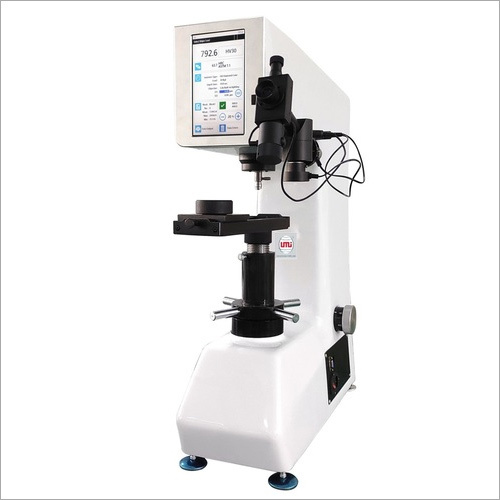
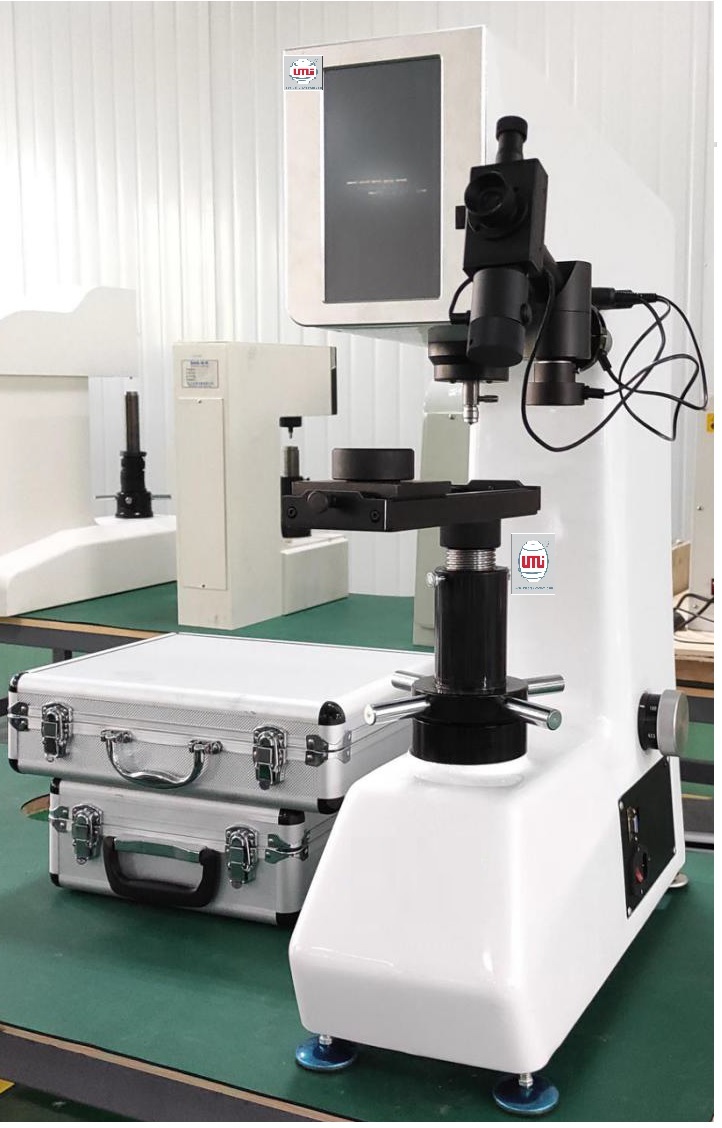
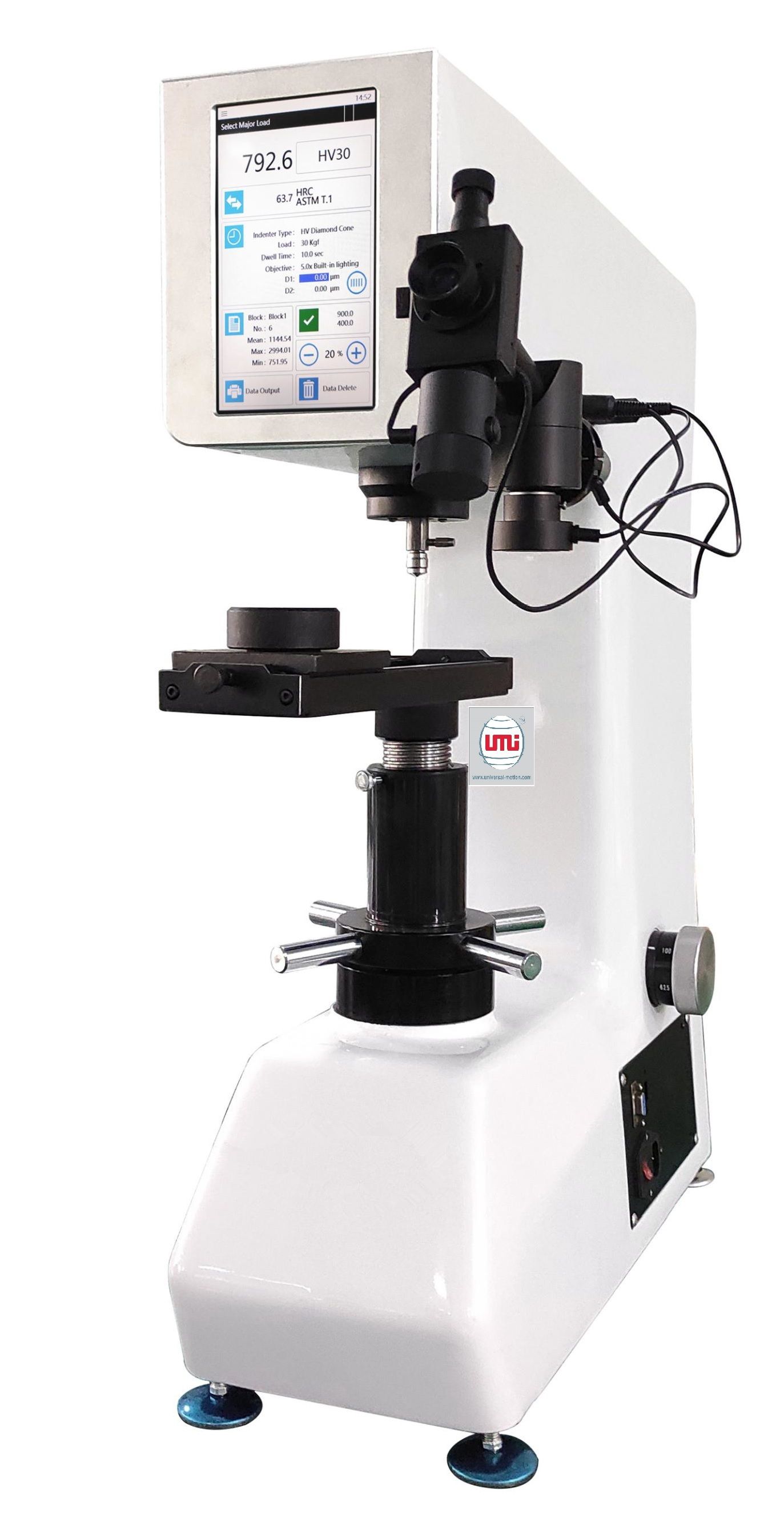
Digital Universal Hardness Tester
600000.00 INR/Piece
Product Details:
- Automation Grade Automatic
- Voltage 220 Volt (v)
- Color white
- Frequency 50 Hertz (HZ)
- Usage INDUSTARY
- Power Supply ELECTRIC
- Material Stainless Steel
- Click to view more
X
Digital Universal Hardness Tester Price And Quantity
- 1 Number
- 300000.00 - 600000.00 INR/Piece
- 600000.00 INR/Piece
Digital Universal Hardness Tester Product Specifications
- 220-240 Volt (V)
- Stainless Steel
- 50 Hertz (HZ)
- INDUSTARY
- ELECTRIC
- Automatic
- 220 Volt (v)
- white
Digital Universal Hardness Tester Trade Information
- Others
- 20 Number Per Month
- 45 Days
- Export packing
- Asia, Australia, Central America, North America, South America, Eastern Europe, Western Europe, Middle East, Africa
- All India
- ISO
Product Description
Digital Universal Hardness Tester
- Universal Hardness Tester - Digital Touch Screen Operated
- Comply Standard : ASTM E18, ASTM E384, ASTM E10,
- ISO 6508.2, ISO 6507.2, ISO 6506.2, IS 3804, BS-10109-2
- Excellent High Quality and High Accurate
Application :
- Widely used in the Rockwell, Brinell, and Vickers
- Hardness test of Ferrous and nonferrous metals.
- Castings, annealed steel, normalized steel, nonferrous metals and soft alloys ( Brinell ).
- Heat-treated materials ( Rockwell ).
- Nitriding layer, ceramic, sheet, foil, plated layer, and minute parts ( Vickers ).
Features :
- With three test modes: Rockwell, Brinell, Vickers
- High-definition Touch Screen; multi-function digital Display.
- Traditional weight system.
- Electronic & Automatic loading & unloading.
- Conversion hardness in different scales.
- With built-in printer for printing the current / history Data.
- With USB port for data output (Excel format).
- Optional: high-definition CCD camera & PC software for generating reports and data management.
- Meets or exceeds ISO, ASTM and JIS standards.
Product details:
- Display Type: Analog
- Automation Grade: Manual
- Voltage: 280 V
- Country of Origin: Made in India
- Power: Electronic
Analog Model:
- Rockwell Test Force : 60, 100, 150 kgf
- Brinell Test Force : 31.25, 62.5, 187.5 kgf
- Vickers Test Force : 30, 100 kgf
- Loading Control : Motorized
Precision Testing with Digital Automation
Experience highly reliable hardness measurement thanks to automated processes and digital controls. The tester ensures consistency in results, minimizing manual errors and enhancing productivity in industrial quality assurance workflows.
Robust Design for Industrial Environments
Crafted from stainless steel, this hardness tester resists corrosion and physical wear, delivering long-term durability. Its design accommodates a wide range of industrial materials, making it suitable for both manufacturing plants and material research labs.
FAQ's of Digital Universal Hardness Tester:
Q: How does the Digital Universal Hardness Tester operate?
A: The tester automatically measures the hardness of various materials by applying a controlled force and analyzing the indentation using digital sensors. It operates efficiently on an electric power supply with a voltage range of 220-240 Volts and frequency of 50 Hertz.Q: What materials can be tested with the Digital Universal Hardness Tester?
A: This device is suitable for testing a wide variety of industrial materials, such as metals and alloys, thanks to its robust stainless steel construction and universal measuring capabilities.Q: When should the hardness tester be calibrated?
A: For optimal accuracy, it is recommended to calibrate the hardness tester at regular intervals based on usage frequency-typically before starting a testing cycle or after a set period as suggested by the manufacturer's guidelines.Q: Where can this Digital Universal Hardness Tester be used?
A: The tester is designed for use in industrial settings, including manufacturing facilities, material testing laboratories, and research and development centers across India.Q: What is the process of using the hardness tester?
A: Place the sample material onto the testing platform, select the test method via digital controls, and initiate the automated cycle. The device will perform the test and digitally display the results within seconds.Q: What are the key benefits of using an automatic digital hardness tester?
A: Automated operation reduces the risk of human error, increases efficiency, and delivers repeatable precision. Digital data output enables easy documentation and analysis, streamlining industrial quality control processes.Tell us about your requirement

Price:
Quantity
Select Unit
- 50
- 100
- 200
- 250
- 500
- 1000+
Additional detail
Mobile number
Email

Other Products in 'Hardness Tester' category

Contact Details

- 203, The Business Center, Erandwane, Near Sanjivan Hospital, Pune - 411004, Maharashtra, India
- Phone : 08045811420
- Send Inquiry
GST : 27AAVPD3179J1Z6
 Send Inquiry
- Mr. Sanjay Dengare (Proprietor)
- Mobile : 08045811420
 Send Inquiry
 Send SMS

UNIVERSAL MOTION INC.
All Rights Reserved.(Terms of Use)
Developed and Managed by Infocom Network Private Limited.
Developed and Managed by Infocom Network Private Limited.


 English
 Spanish
 French
 German
 Italian
 Chinese (Simplified)
 Japanese
 Korean
 Arabic
 Portuguese